
The Two Hours Before Every Onsite That Nobody Sees
How interview preparation packets determine hiring quality, and why the coordinator building them can't keep up.
It's 4 PM on a Tuesday and you're staring at tomorrow's onsite schedule. Three interviewers, one candidate for a clinical product role, and a packet that doesn't exist yet. The resume is in the applicant tracking system. The portfolio link is in a recruiter's email from last week. The screening notes are in a Slack thread where the recruiter flagged that the candidate transitioned from agency to in-house work and needs probing on long-term product roadmap ownership. The design manager needs portfolio-depth questions. The engineering lead needs collaboration and handoff questions. The VP needs strategic thinking probes.
You're a recruiting coordinator at a 250-person healthcare technology company. Nobody has asked you to build this packet. Nobody needs to. It's the part of the job that doesn't show up on any task list but determines whether tomorrow's panel produces actual signal or three people asking the same question about design systems.
You open a blank document. You pull the resume, copy the candidate's summary, and start reading the screening notes to figure out which flagged concerns belong to which interviewer. The design manager should probe on design debt management in fast-paced sprints. The engineering lead should ask about technical constraints during handoff. The VP should dig into how the candidate measures design impact on product metrics. For each session you write five to seven tailored questions, weaving in the candidate's seven years of experience, the design system migration that affected fifteen internal tools, and the dashboard redesign that drove a 25% retention increase.
For a three-person panel, this takes 90 minutes to two hours. For a five-person panel with a lunch presentation, it's half a day.
Ninety Minutes Per Packet, Fifteen Open Roles, Three Onsites This Week
38% of recruiter time already goes to scheduling and coordination. The packet work comes on top of that. When you're running fifteen open roles and three onsites land on the same week, something gives. Usually it's the packet quality for the third candidate. The questions get generic. The screening flags don't make it to the right interviewer. And the decision that comes out of that panel is based on incomplete signal.
When the Packet Is Thin, the Panel Misses What Matters
The cost isn't just your afternoon. It's what happens in the room.
An interviewer walks in cold, asks about "design systems experience" because it was on the resume, and misses the concern the screener flagged about the candidate's transition from agency to in-house work. Three panelists independently ask about cross-functional collaboration because nobody was told to cover different ground. The hiring committee debriefs and realizes they have three data points on the same thing and zero on strategic product thinking.
46% of new hires fail within 18 months, and 89% of those failures trace to attitudinal factors, not technical skill gaps. The structured interview, where each panelist probes different dimensions with tailored questions, is twice as predictive of job performance as an unstructured conversation. But a structured interview requires structured preparation. Someone has to read the screening notes, map the flagged concerns to the right interviewer, and write questions that go deeper than "tell me about a time you collaborated with engineers."
That someone is you. And you're doing it from scratch for every single candidate.
The same structural problem shows up wherever a coordinator assembles tailored briefing materials for a panel of evaluators under deadline pressure. A talent operations manager at a 200-person industrial automation company running 25 onsites a month across three offices faces the same breakdown at a different scale. Each hiring manager has different expectations for what interviewers should probe. The mechanical engineering team wants handoff rigor. The sales engineering group wants customer-facing communication. The product team wants systems thinking. With 25 packets a month and no standardized way to generate tailored questions from screening notes, the coordinator becomes the bottleneck. Packet quality becomes a function of which week the onsite falls on, and whether the coordinator had two hours or twenty minutes.
This isn't a scheduling problem. Interview scheduling software handles calendar coordination well. It doesn't generate content for the interviewers. It doesn't read the screener's notes about a candidate's agency-to-in-house transition and turn that into a targeted probe for the design manager. Scheduling is solved. Preparation is not.
Here's why it resists simple automation. The job has two layers that off-the-shelf connectors can't bridge. The first layer is data collection: pulling a resume from one place, external profile links from another, screening notes from a third. A connector can wire those sources together. The second layer is synthesis: reading the screening summary, understanding that "potential need for more technical alignment with Engineering" means the engineering lead's session should include probes about design-to-code handoff friction, not just generic collaboration questions. That second layer requires reading context and making a judgment about which concern maps to which interviewer's focus area. A Zapier zap can move data between apps. It can't read a screener's note and decide which of three interviewers should ask about it.
Shared templates help with structure but not synthesis. Someone still fills them in. The template gives you headers and formatting. It doesn't give you the seven tailored questions that connect a candidate's fifteen-tool design system migration to the engineering lead's focus on handoff processes. And templates drift across recruiters until packets look different depending on who built them.
Pushing the burden to interviewers ("here's the resume, you figure out what to ask") saves the coordinator time but produces inconsistent, redundant, or superficial coverage. Three interviewers all ask about collaboration. Nobody asks about the flagged concern. The debrief is noise.
The gap between a structured interview and an unstructured one is the packet that makes it structured. When that packet depends on how much time a coordinator had that afternoon, the interview quality becomes a function of scheduling load, not candidate quality.
lasa.ai builds AI agents that do exactly this job: take a candidate file, screening notes, and interview schedule, and produce a tailored preparation packet where each interviewer gets questions mapped to their focus area and the candidate's specific background.
See what this looks like for your interview process →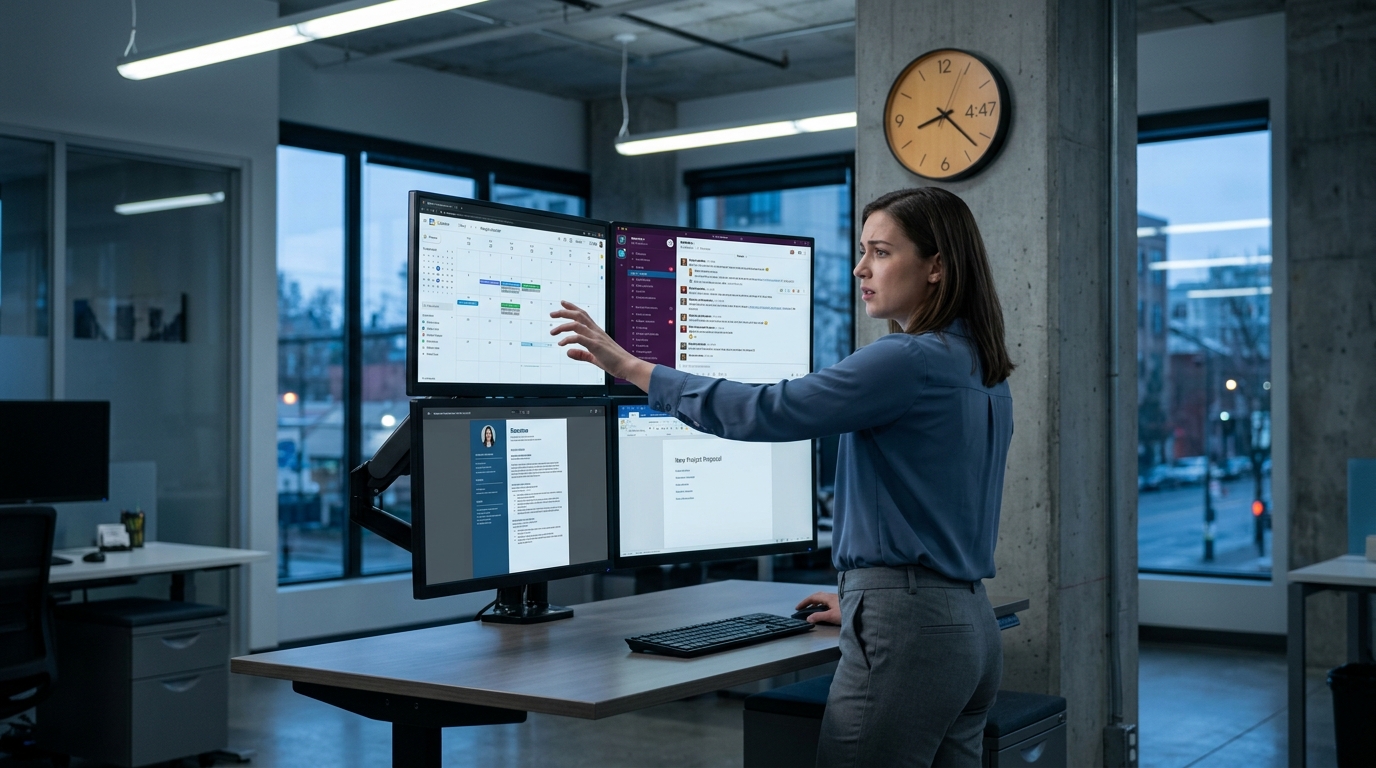
What Changes When Preparation Takes Minutes Instead of Hours
The afternoon before an onsite looks different. Instead of opening a blank document and starting from scratch, you provide the candidate's resume, the interview schedule with each panelist's focus area, and the screening notes. The agent pulls the candidate's external profiles (portfolio, professional network, code repositories), reads the screening summary and flagged areas, and maps each interviewer's focus to the candidate's background and the concerns from screening. If a profile isn't accessible, it handles that gracefully and moves on. No manual copy-pasting from browser tabs.
The design manager gets questions about portfolio depth and design leadership, with specific probes on how the candidate manages design debt in fast-paced sprints, drawn from the screener's notes. The engineering lead gets questions about cross-functional collaboration and design-to-engineering handoff, with probes about technical constraints when proposing changes. The VP gets questions about product thinking and strategic impact, with probes about measuring design impact on business metrics.
Each section includes the interviewer's name, role, focus area, session time, and format. The questions aren't generic. They reference the candidate's specific experience: a design system migration across fifteen-plus tools, a dashboard redesign, a transition from agency to in-house. The flagged concerns from screening show up in the right sections, so the interviewer asking about long-term roadmap ownership is the one whose focus area calls for it.
This is the distinction that matters. The agent delivers a complete job (the finished packet, ready to review), but it follows a defined, auditable process under the hood. Every step is traceable. The screening notes map to specific probes. The focus areas map to specific question sets. The candidate's background informs every section. It's agent-level outcomes with workflow-level reliability. You're not hoping an algorithm figured it out. You can see exactly why each question is there.
From Assembly Line to Quality Review
The packet the agent produces opens with a candidate overview: current position, screening summary, strengths. Then the interview schedule as a structured table with time, interviewer, role, focus area, and format for each session. Then the per-interviewer sections, each with five to seven tailored questions.
The flagged areas to probe appear in their own section, so you can verify that nothing from the screener's notes was missed. The reference check questions are listed separately. And if the candidate had external profiles (a portfolio, a professional profile, a code repository), the relevant content is appended.
You review and adjust instead of building from scratch. A question might need tightening. A probe might need reframing based on something you know about the hiring manager's priorities that wasn't in the screening notes. That takes ten minutes. Not two hours.
For a head of recruiting at a 400-person financial services firm, the output serves a different but related purpose. Compliance requires documented evidence that each interviewer was briefed on specific evaluation criteria before the panel. The structured packet, with named interviewers, defined focus areas, and tailored questions linked to screening notes, becomes that documentation. The data shape is the same: candidate overview, schedule table, per-interviewer sections with focus-specific questions, flagged concerns, reference questions. What shifts is the compliance frame around it. But the coordinator's relief is identical: reviewing documentation instead of producing it.

What Tuesday Looks Like When the Packet Builds Itself
The coordinator who used to spend two hours per packet now spends ten minutes reviewing one. The quality doesn't depend on how many onsites are stacked that week. The candidate who interviews on a busy Friday gets the same depth of preparation as the one who interviews on a quiet Tuesday.
Interviewers stop asking redundant questions because each one walks in knowing exactly what to probe and why their focus area differs from the person before them. The hiring committee debrief has actual signal across multiple dimensions instead of three overlapping assessments of the same thing.
The screening notes actually reach the interviewer who needs them. The flagged concern about agency-to-in-house transition gets a targeted probe in the design leadership session, not a vague question in the engineering collaboration session. The candidate notices the difference. They walk out feeling like the panel knew their background (which, honestly, is the part that determines whether they accept the offer).
75% of organizations report that evaluators now expect faster, more personalized preparation while involving more stakeholders in decisions. That pressure applies whether you're a recruiting coordinator preparing five onsites a week, a clinical coordinator assembling tumor board summaries for eight specialists, or a category manager building vendor evaluation packets for a five-person sourcing committee. The pattern is the same: multiple evaluators, each needing the same underlying data filtered through their specific focus area, assembled under deadline by a coordinator whose quality bar is expected to hold regardless of volume.
Whether you're preparing interview packets for 40 clinical product hires, standardizing onsite preparation across three offices at an industrial automation company, or producing compliance-ready interviewer briefings at a financial services firm, the morning changes the same way. You stop building packets and start reviewing them. The interviewers walk in prepared. The decisions get better. And the work that used to be invisible becomes the work that didn't need to happen at all.
Teams that automate interview preparation often extend to resume parsing and candidate scoring next, applying the same pattern upstream: structured evaluation of candidate profiles against job requirements, before the onsite ever gets scheduled.
lasa.ai builds AI agents for the operational work that sits between "the data exists" and "the evaluators are prepared." Interview preparation packets are one pattern. The same agent architecture handles tumor board case summaries for clinical coordinators, investment committee memos for PE associates, and vendor evaluation packets for procurement teams.
Wherever a coordinator aggregates data for a panel review under deadline, this is the job.
See what this looks like for your process →Frequently Asked Questions
How do you prepare interviewers for a panel interview?
What should be included in an interview preparation packet?
Can you automate interview preparation for hiring teams?
Why do structured interviews produce better hiring decisions?
How long does it take to prepare an interview packet?
See What This Looks Like for Your Process
Let's discuss how LasaAI can automate this for your team.